

A multi-vendor marketplace launch timeline should follow the longest chain of required decisions, integrations, testing and seller preparation—not a generic week count. Set a launch date after those dependencies have owners and estimates; include operational readiness and pilot corrections, not just development, in the schedule.
- A multi-vendor marketplace launch timeline needs separate gates for seller onboarding, payments, order handling and operational readiness.
- Thefiniteloop recommends a controlled marketplace pilot before public launch commitments.
- Separate software completion from seller readiness; both must pass before you open the marketplace.
- Cut optional features before cutting refund testing, seller permissions or payment reconciliation.
Why this matters
A marketplace launch is not simply a storefront release. Buyers, sellers and operators need connected workflows, and unfinished rules in one workflow affect the others.
For your 2026 launch plan, define what must work before you announce a date. For marketplace founders, Thefiniteloop recommends a controlled pilot before a public launch. That recommendation does not require a custom rebuild: use an existing platform when its actual workflows fit your operating model.
How long does it take to launch a multi-vendor marketplace?
The launch date comes from the critical path: the dependent tasks that determine the earliest possible release. Estimate those tasks against an agreed launch scope, then account for external approvals and the work required after pilot testing.
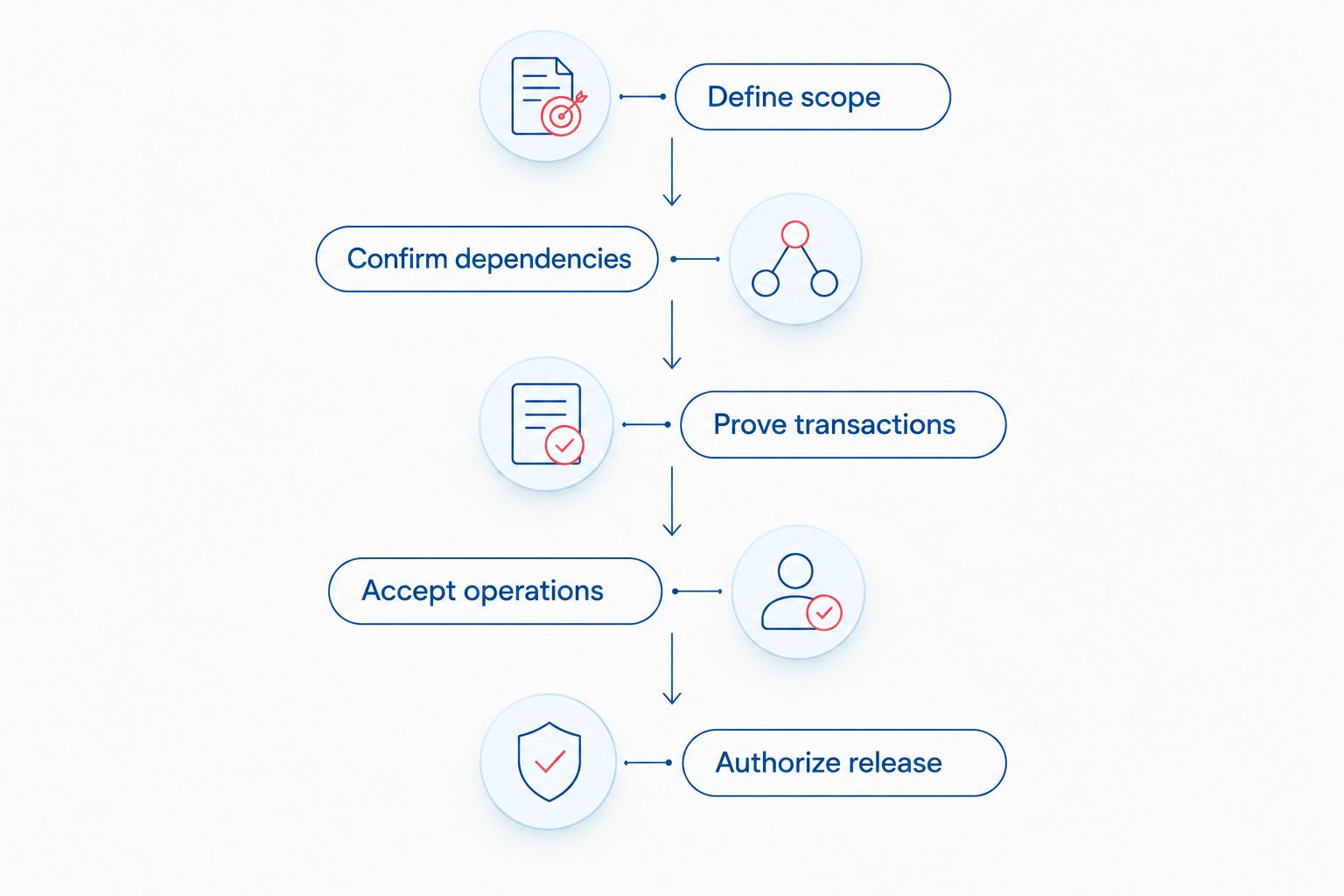
Use these 5 launch gates to build the schedule. They are planning checkpoints, not promised delivery durations.
- Scope approved. Define buyers, sellers, transaction rules, launch markets and exclusions. Record who can approve changes.
- Dependencies confirmed. Confirm required payment capabilities, integration access, seller data and operational decisions. Give every dependency an owner.
- Transaction flow proven. Test seller onboarding, listings, checkout, order allocation, refunds and the associated financial records together.
- Pilot accepted. Let invited sellers and buyers exercise the agreed workflows. Resolve issues that block transactions, security or support.
- Operations ready. Assign monitoring, incident handling, seller support and release authority. Confirm the procedure for stopping new transactions if necessary.
Some work can overlap. Interface design can proceed while sellers prepare catalog data, provided the underlying listing structure is settled. Work that depends on unresolved business rules should not be treated as independent progress.
Ask for a schedule showing dependencies rather than an isolated delivery date. A task marked complete means little if the next task cannot start.
Choose the release boundary before estimating delivery
For 2026 planning, distinguish 3 release boundaries: a controlled pilot, a public launch and a broader expansion. Each needs its own acceptance criteria; none has a reliable duration without a defined scope.
| Release boundary | Best for | What it proves | Advantage | Limitation |
|---|---|---|---|---|
| Controlled pilot | Validating transaction and support workflows | Invited participants can complete the agreed marketplace journey | Limits exposure while you resolve operational problems | Does not establish readiness for every seller or demand pattern |
| Public launch | Opening an accepted operating model to the intended audience | Buyer, seller and operator workflows work within the published scope | Creates a clear commercial release boundary | Requires support and exception handling beyond a demonstration |
| Broader expansion | Adding markets, categories or integrations after launch | The next operating model works without breaking existing transactions | Separates new complexity from initial validation | Requires further testing and operational preparation |
Controlled pilot: prove the operating model
A pilot needs real workflow coverage, not every planned feature. Include seller approval, a valid listing, an order, seller notification and the agreed refund process.
Keep optional discovery features and secondary integrations outside the pilot unless they are essential to completing a transaction. The pilot should expose business-rule gaps before public traffic encounters them. It is not a substitute for security testing or a reason to process transactions through unverified payment arrangements.
Public launch: support the promised service
Public launch means your operating team can support the marketplace you advertise. Sellers need clear responsibilities, buyers need accurate order information, and operators need a way to investigate failures.
An open registration form is not evidence of launch readiness. Decide whether new sellers require approval, how unacceptable listings are handled and who resolves a buyer complaint involving a seller.
Broader expansion: reopen the relevant decisions
Adding another market, fulfillment model or seller type changes the release scope. Treat the change as an engineering and operating decision, not just a storefront setting.
Identify the relevant jurisdiction before reviewing payment availability, tax treatment or legal responsibilities. A successful launch in the United States does not establish that the same arrangements apply in the United Kingdom or European Union.
Why the multi-vendor marketplace launch timeline varies
These factors belong in your 2026 estimate because they define what must be designed, connected and accepted. Resolve them before asking suppliers to commit to equivalent scopes.
- Seller onboarding. Decide what sellers submit, who approves them and what happens when information is incomplete. Self-service onboarding and operator-managed onboarding require different workflows.
- Payment responsibilities. Establish who receives funds, how seller amounts are calculated and how refunds affect those amounts. Confirm that the proposed payment arrangement supports the intended business model.
- Order and fulfillment rules. Specify whether an order contains products from different sellers, how shipments are tracked and who handles cancellations. These rules shape both software and customer support.
- Catalog readiness. Agree required product fields, category rules, image requirements and stock ownership. Importing records does not prove that sellers can maintain them correctly.
- External integrations. Identify systems responsible for inventory, accounting, shipping and notifications. Include access, test environments and failure handling in the plan.
- Acceptance and ownership. Name the people who approve business rules, test results and release readiness. Document who controls source code, infrastructure and operational accounts.
Do not turn these factors into an unexplained contingency allowance. Attach an unresolved question, a decision owner and a completion condition to each relevant risk.
Build the schedule around evidence, not screen completion
A screen-by-screen plan hides the connections that make a marketplace work. Schedule complete journeys instead: an approved seller publishes a listing, a buyer orders it, and the operator can trace what happened.
Thefiniteloop's marketplace development position is straightforward: agree the transaction rules before polishing secondary features. Custom development is appropriate when the required workflows demand it; it also creates code and operational responsibilities that your team must own.
Define scope
Write a release brief that identifies the transaction you intend to support. Include seller types, product types, fulfillment responsibility and explicit exclusions.
Describe rules in testable language. For example, specify who can approve a seller rather than asking for an administration dashboard and leaving its permissions undefined.
Confirm dependencies
Create a dependency register covering access credentials, third-party decisions, seller content and business approvals. Assign an accountable owner to each entry.
An engineering estimate should distinguish work the delivery team controls from work awaiting another party. Keep an unresolved external dependency visible rather than burying it inside a development task.
Prove transactions
Build and test the connected order journey before declaring individual components finished. Confirm what buyers, sellers and operators see when the journey succeeds or fails.
For financial validation, define 2 reconciliation checks: order-to-payment matching and refund-to-seller-balance matching. These are recommended acceptance checks, not a claim that every marketplace uses the same accounting model.
Accept operations
Have the people responsible for seller support and buyer issues use the operational tools. They need to locate orders, understand status changes and identify the next action without developer interpretation.
Use written software delivery acceptance criteria to distinguish an observed demonstration from an accepted release. Record unresolved defects and identify which ones prevent launch.
Authorize release
Name the person who approves public access. Give that person the pilot results, unresolved risks, monitoring arrangements and stop procedure.
A failed launch does not always require restoring an older software version. Your response plan must also address transactions already created and any required reconciliation.
What can you remove to launch sooner?
Remove optional scope, not the controls that make the agreed transaction safe to operate. In your 2026 release brief, identify what can wait and explain the business consequence of waiting.
Consider deferring recommendation features, additional presentation themes or secondary reporting views when the marketplace can operate without them. Keep the information operators need to investigate orders and reconcile transactions.
Manual processes are a valid launch choice when responsibility is explicit. Operator-approved seller onboarding, for example, avoids building self-service approval workflows immediately, but leaves your team responsible for the work and its capacity.
Do not label a missing workflow as manual unless someone can explain how it will operate. A spreadsheet without an owner, access controls or a reconciliation procedure is not an operating plan.
How do you turn an estimate into a launch commitment?
Ask for a dependency-based estimate with assumptions attached. It should state what is included, what is excluded, who provides external inputs and which acceptance results authorize release.
Then agree how scope changes affect the schedule. Adding another seller type or a different fulfillment workflow requires reassessing the affected work, even when the requested interface change looks small.
For a 2026 procurement decision, compare suppliers against the same release boundary. A quote for a demonstration is not comparable to a plan covering payment exceptions, seller support and production handover.
Commit publicly when the evidence supports the date, not when a design presentation looks finished. Keep internal target dates useful by updating them when dependencies change.
Can a marketplace launch before every seller is onboarded?
Yes, a controlled pilot can launch with selected sellers once their listings, transaction workflows and support arrangements pass acceptance. Define which sellers are included and prevent incomplete accounts from appearing ready to trade.
This approach suits validation, not a promise that every category or seller is available. Align your launch messaging with the actual pilot boundary.
Does using an existing platform remove development time?
An existing platform removes the need to build capabilities it already provides and that meet your requirements. It does not remove configuration, integration, data preparation or acceptance testing.
Check the hardest workflow first. If refunds, seller permissions or inventory ownership conflict with your operating model, a polished storefront will not resolve the mismatch.
Should mobile apps be part of the first marketplace release?
Include mobile apps when the launch depends on a capability that requires them. Otherwise, evaluate whether the initial buyer and seller journeys can work through the web experience.
Separate apps add release surfaces to maintain and test. Do not add them solely to make the launch scope appear more complete.
FAQ
What determines a multi-vendor marketplace launch timeline?
The critical path determines a multi-vendor marketplace launch timeline: the dependent decisions and tasks required for an accepted release. Include seller preparation, payment arrangements, integration testing and operational readiness.
Can I get a reliable launch date before discovery?
A reliable launch commitment requires an agreed scope and understood dependencies. Treat an earlier date as a planning target with explicit assumptions, not an accepted delivery commitment.
What’s the smallest useful marketplace pilot?
The smallest useful marketplace pilot proves the agreed seller-to-buyer transaction and its operational handling. Include listing approval, ordering, notifications, refunds and the records needed to investigate problems.
Is a configured platform better than custom marketplace software?
A configured platform is the better starting point when its supported workflows fit your marketplace. Custom software becomes relevant when required business rules cannot be met acceptably through configuration and supported integrations.
What should block a public marketplace launch?
Unresolved defects that compromise transactions, access control, financial records or essential support should block public launch. Define those blocking conditions before acceptance testing starts.
How should I compare marketplace development proposals?
Compare proposals against the same release scope, dependency assumptions and acceptance criteria. Require each proposal to identify exclusions, external responsibilities and post-launch ownership.
Should AI features be included in the launch scope?
Include AI features only when they solve a defined launch requirement and have acceptance criteria. Defer optional features that distract from proving seller onboarding, transactions and operational control.
One last thing
The date that matters is not when a developer can place a successful test order. It is when your team can explain and resolve an unsuccessful one.
Before authorizing launch, ask the operator to trace a failed payment, a canceled order and a refund without relying on a developer's memory. If the records and responsibilities are unclear, fix that gap before adding another feature.
Related guides
- Define what belongs in your first software release
- Plan recovery from failed software integrations
- Clarify code ownership before hiring a software company
Your project next
Let’s build what matters
Schedule a consultation to discuss your goals and technical needs.