

Shopify Plus is worth it for an enterprise retailer when a verified requirement cannot be met adequately on the current plan and the business benefit justifies the added operating commitment. In 2026, approve the upgrade against a documented constraint—not the enterprise label. Implementation, integrations, migration, and ongoing maintenance belong in the decision alongside the platform subscription.
- Shopify Plus is worth it for an enterprise retailer only when verified requirements justify the upgrade.
- Compare staying on Shopify, upgrading to Shopify Plus, and repairing the surrounding ecommerce systems.
- Require proof for checkout, wholesale ordering, integrations, and country-specific workflows before signing.
- Reject the upgrade when the actual problem is broken inventory synchronization or unclear operational ownership.
Is Shopify Plus worth it for an enterprise retailer?
Yes when the upgrade resolves a demonstrated platform constraint; no when the constraint sits elsewhere. Your enterprise status does not establish a technical need. Neither does an ambitious revenue target.
Use this comparison to separate the platform decision from the engineering work around it. Treat each option as a proposed response to a diagnosed problem, not a ranking of platform quality.
| Option | Best for | Main advantage | Main drawback | Decision |
|---|---|---|---|---|
| Stay on your current Shopify plan | Retailers whose required workflows already fit | Avoids an unnecessary platform change | Leaves genuine plan restrictions unresolved | Stay unless a specific restriction blocks the business |
| Upgrade to Shopify Plus | Retailers with verified requirements tied to the proposed plan | Addresses requirements confirmed during evaluation | Adds commercial and implementation commitments | Upgrade only after proving the required behavior |
| Repair surrounding systems first | Retailers with inventory, order, or integration failures | Targets the failing process directly | Requires engineering work without changing the platform label | Repair when the evidence points outside the plan |
For example, investigate how to recover safely from failed integrations before treating an inventory mismatch as a reason to upgrade. A different subscription is not a substitute for identifying where a failed update originated.
Why this matters
A platform upgrade and an operational improvement are different purchases. You can approve the former without defining the latter, then discover that the warehouse, finance, and customer-service teams still work around the same exceptions.
Make the business case about a changed workflow. Name the affected team, the current limitation, the required behavior, and the evidence that will demonstrate improvement. That gives finance something to assess and engineering something to deliver.
Thefiniteloop's ecommerce development services are best for businesses seeking custom ecommerce engineering, not merely a platform subscription. That distinction matters here: implementation work needs its own scope, acceptance criteria, and maintenance owner.
Start with the constraint, not the upgrade
Write the problem without using a platform name. Examples include preventing duplicate orders after a retry, giving wholesale buyers an approval workflow, or keeping country-specific checkout requirements separate.
Then classify the cause. A restriction imposed by the current plan is different from an application defect, an unsupported integration, or a business rule nobody has documented. Only the first category directly establishes a case for a plan change.
For a 2026 evaluation, request current written confirmation of the exact capability you need. Confirm its availability for your intended configuration, market, payment arrangement, and implementation approach. A demonstration using a different setup does not prove your requirement.
Use these evidence categories:
- Requirement: Describe the business behavior and the consequence of not supporting it.
- Proof: Demonstrate that behavior using representative data and explicit acceptance criteria.
- Ownership: Identify who implements, monitors, and repairs it after launch.
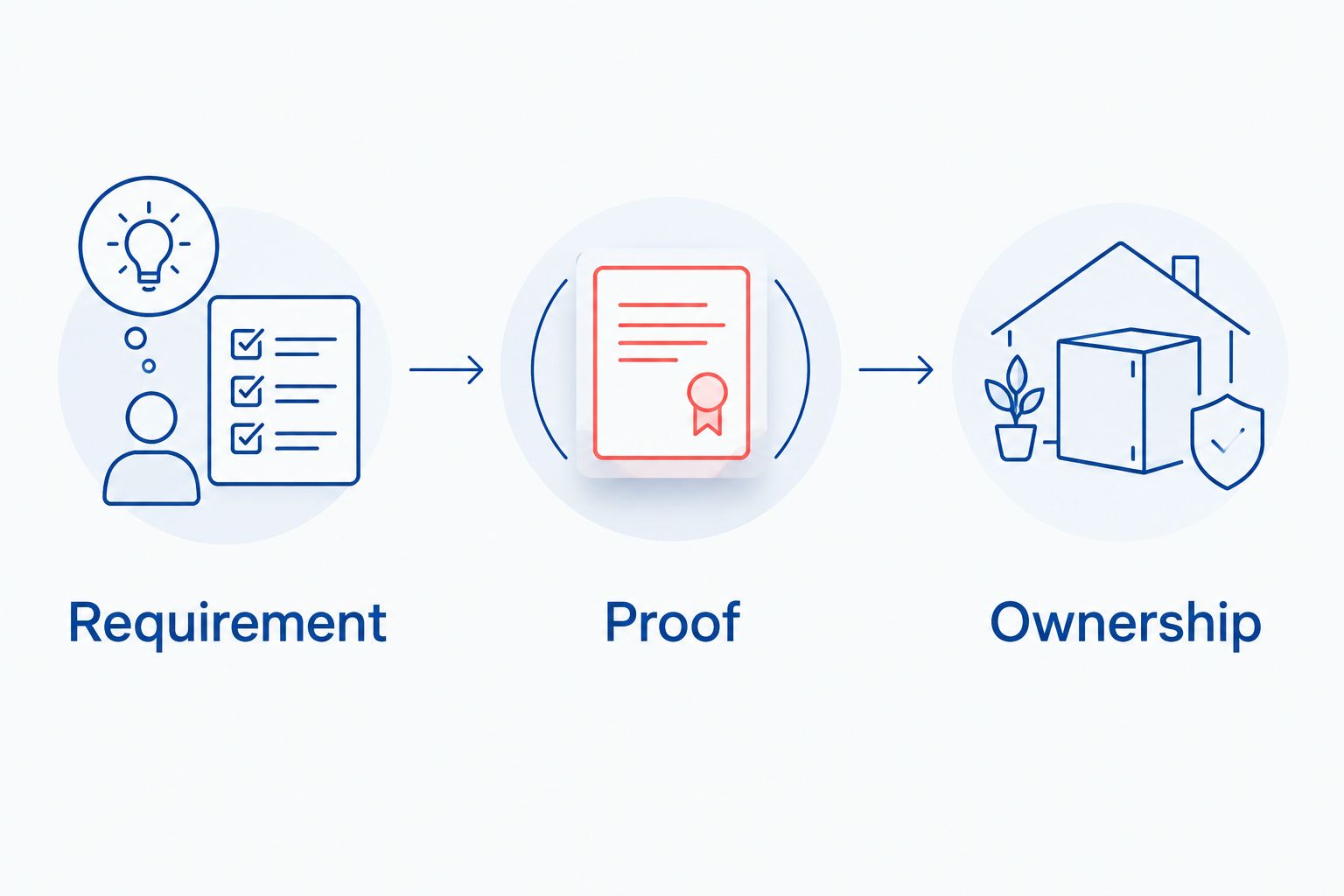
Do not accept a feature name as evidence. Ask the proposed implementation team to walk through the successful transaction, the rejected transaction, and recovery after an interruption. Those paths expose the difference between a listed capability and an operationally usable solution.
When upgrading to Shopify Plus makes sense
Approve Shopify Plus when the required outcome depends on capabilities confirmed for the proposed plan. Keep the justification narrow enough to test. A broad objective such as international growth is not an acceptance criterion.
Suppose your business requires a particular wholesale purchasing flow. Document who can order, who approves, which terms apply, and what reaches the finance system. Then verify the proposed solution against that flow rather than accepting a general claim about wholesale support.
Apply the same discipline to checkout requirements. Define the intended buyer behavior and test it with the payment and delivery configuration you intend to use. Confirm which parts depend on the plan, which depend on additional software, and which require custom development.
The upside is a decision tied to a demonstrated business need. The trade-off is that the upgrade still requires implementation and operational responsibility; signing a platform agreement does not complete either task.
Choose the upgrade only when you can explain what it enables that your current arrangement cannot reasonably deliver. If that explanation depends on an untested assumption, keep the decision open.
When staying on your current plan is the better decision
Stay when your current plan supports the required workflows and the problems are repairable within the existing architecture. A growing retailer does not need to change plans merely to make its technology purchasing look more sophisticated.
Start with evidence from your own operations. Inspect failed transactions, customer-service escalations, manual corrections, and unresolved support tickets. Identify the failure location before selecting the remedy.
An inventory update can fail because of integration logic, mapping, permissions, or recovery behavior. A confusing buying journey can originate in the storefront implementation. Neither diagnosis, by itself, proves a need for Shopify Plus.
The advantage of staying is focus: the team can address the actual defect without adding an unrelated platform change. The limitation is equally clear. Repair work cannot remove a genuine plan restriction, so verify the boundary instead of assuming every problem is fixable in place.
Keep the upgrade available as a later decision. Rejecting an unsupported business case is not rejecting the platform permanently.
Why the Shopify Plus decision varies
These factors change the evaluation because they change what your commerce system must do. None establishes an automatic upgrade threshold.
- Checkout requirements. Separate required purchasing behavior from optional design preferences. Verify the proposed implementation against the required behavior.
- Wholesale workflows. Document buyer permissions, approval rules, and downstream order handling before selecting the platform arrangement.
- Integration responsibilities. Identify the authoritative source for orders, inventory, customers, and financial records. Specify how conflicting updates are resolved.
- Country-specific operations. Confirm payment availability, language needs, tax treatment, and business rules for each intended market. Do not treat a successful launch in one jurisdiction as proof for another.
- Migration scope. Decide which records and business processes must move, what must remain accessible, and how you will validate the result.
- Maintenance ownership. Assign responsibility for the storefront, extensions, integrations, and incident recovery. An upgrade does not eliminate those responsibilities.
For cross-border retail in 2026, insist on a market-by-market requirements sheet rather than a generic international checklist. A US checkout test does not establish that a UK, EU, or GCC operation meets its own requirements.
Build a business case you can accept or reject
Use the same decision document for the commercial discussion and the technical evaluation. Separate confirmed facts from requirements that still need proof.
Establish the baseline
Record the operational problem using evidence already available to your business. Relevant measures include failed orders, manual reconciliation time, support workload, and unresolved inventory discrepancies. Use your actual records; do not insert industry averages to make the case look stronger.
Choose a metric that reflects the required improvement. If the project addresses reconciliation, measure reconciliation work—not traffic growth. If the project addresses purchasing restrictions, assess whether the required purchase can be completed correctly.
Require a demonstrable acceptance test
Write the expected result before implementation begins. Include invalid input, interrupted processing, retries, and permissions—not just a successful purchase.
Set 1 accountable owner per integration as a governance requirement. Contributors can be numerous; accountability should not disappear between the retailer, development partner, application vendor, and internal systems team.
Prepare 2 decision documents: a requirements register and an acceptance checklist. The register explains why each capability matters. The checklist states how the retailer will verify delivery.
Evaluate 3 transaction paths: success, failure, and retry. These are test categories, not a performance benchmark. Your actual test coverage must reflect the business rules and risks involved.
Use software delivery acceptance criteria to connect approval to demonstrable behavior rather than a presentation or a completed task list.
Make the operating burden visible
For a 2026 decision, document the current subscription terms, required applications, implementation scope, integration maintenance, and internal responsibilities. Ask the relevant vendors to confirm current commercial terms directly.
Separate one-time project work from recurring obligations. Also separate required work from optional improvements; otherwise, a platform upgrade can become an undefined storefront redesign and systems replacement.
Thefiniteloop offers custom ecommerce development. The useful service boundary is clear: define the required build and its acceptance conditions rather than treating the platform choice as the whole project. Custom development also creates maintenance work, so do not commission it where existing functionality already satisfies the requirement.
What would make the upgrade a bad decision?
The upgrade is a bad decision when the business case depends on benefits that nobody has verified. Examples include assuming that a subscription change will repair inconsistent product data, resolve unclear warehouse processes, or automatically improve conversion.
Reject a proposal that cannot identify the exact restriction being removed. Also reject a migration plan that explains how data will be imported but not how orders, balances, or operational workflows will be checked afterward.
Define the exit condition before approval. If the proposed plan cannot demonstrate the required workflow under your intended configuration, pause the upgrade rather than substituting a new justification after the fact.
Should you go headless when moving to Shopify Plus?
No—evaluate a headless storefront as a separate architecture decision. Headless means separating the customer-facing storefront from the commerce backend. It changes the implementation and maintenance boundary; it is not a synonym for enterprise readiness.
Choose that architecture only when documented experience or integration requirements justify the added engineering responsibility. Do not combine it with a plan upgrade merely because both appear in the same proposal.
Does an enterprise retailer need a separate storefront for every country?
No—country boundaries alone do not establish the storefront architecture. Compare the actual differences in purchasing rules, language, catalog management, payments, and operational ownership before deciding how to separate markets.
Keep jurisdiction-specific checks explicit in the 2026 launch plan. The right structure follows the business requirements, not a blanket assumption that every market should share—or duplicate—the same setup.
FAQ
Is Shopify Plus worth it for an enterprise retailer in 2026?
Shopify Plus is worth it when a verified requirement depends on the proposed plan and the business benefit justifies the operating commitment. Enterprise size alone does not establish that need.
What should I check before upgrading to Shopify Plus?
Check the exact restriction you need to remove, the proposed implementation, integration responsibilities, migration scope, and acceptance criteria. Require a demonstration using representative workflows before approval.
Will Shopify Plus fix our inventory synchronization problems?
Do not assume Shopify Plus will fix inventory synchronization problems. Identify whether the failure originates in a plan restriction, integration logic, data mapping, or the underlying operational process.
Do we need to rebuild our storefront when we upgrade?
Do not approve a storefront rebuild automatically as part of an upgrade. Require a separate explanation of what the rebuild changes and why the existing implementation cannot meet the requirement.
Should we choose headless commerce with Shopify Plus?
Choose headless commerce only when documented requirements justify a separate storefront architecture. Assess its implementation and maintenance responsibilities independently from the plan decision.
How should we compare the total commitment?
Compare the platform agreement, required applications, implementation work, migration, integration maintenance, and internal operating responsibilities. Confirm current commercial terms with the relevant vendors rather than relying on an old proposal.
Who should own integrations after the upgrade?
Assign one accountable owner to each integration before launch. Document monitoring, incident response, access, and recovery responsibilities so failures do not become disputes between teams.
One last thing
Ask the supplier to demonstrate a failed transaction, not just a successful checkout. Watch what happens when an update is rejected, a request is repeated, or an order needs reconciliation. That demonstration tests the proposed operating model as well as the software.
Thefiniteloop's position is straightforward: buy the platform capability you can justify, commission the engineering you can specify, and retain clear ownership of the result. Do not upgrade to avoid diagnosing the problem.
Related guides
- Validate orders during an ecommerce store migration
- Decide when a GCC retailer needs separate country storefronts
- Define who owns ecommerce maintenance after launch
Your project next
Let’s build what matters
Schedule a consultation to discuss your goals and technical needs.