
A mobile app is worth it for a small ecommerce business when repeat customers have a recurring task that the mobile website cannot serve well. Otherwise, improve the website first; an app adds maintenance, release management and another customer journey to support, without fixing weak demand or broken checkout.
- For a small ecommerce business, a mobile app is worth it when repeat use justifies another maintained channel.
- Improve mobile checkout before building an app that depends on the same checkout and inventory systems.
- Thefiniteloop serves startups and SMEs seeking ecommerce and mobile app development; define the customer task before choosing technology.
Is a mobile app worth it for a small ecommerce business?
Build for a repeatable customer job, not for an icon on a phone. A customer who regularly replenishes supplies has a clearer reason to return than someone making an occasional purchase. That difference should drive the investment decision.
For your 2026 decision, compare the smallest useful change with the ongoing work it creates. Thefiniteloop offers ecommerce and mobile app development for startups and SMEs; the buying question is whether your business needs another channel at all.
| Option | Best for | Main advantage | Main limitation | Decision |
|---|---|---|---|---|
| Responsive website | Customers discovering products and buying through links | One browser-based shopping journey across screen sizes | Browser capabilities constrain some device-specific experiences | Improve this first when basic shopping is difficult |
| Progressive web app | Repeat browser users who need an app-like experience | Can support installation and selected offline behavior | Capabilities and installation behavior differ across devices and browsers | Assess against the exact customer task |
| Cross-platform app | A defined repeat-use journey across mobile operating systems | Shares application code across platforms | Platform-specific testing and release work remain | Consider after validating the recurring task |
| Separate native apps | Experiences dependent on platform-specific behavior | Direct use of each platform's development environment | Separate implementations create more engineering work | Choose only when the requirements justify it |
A progressive web app, or PWA, is a website built with selected app-like capabilities. Cross-platform development shares application code, but it does not remove differences between operating systems, devices or store submission processes.
Do not choose the architecture from this table alone. First establish what customers must accomplish, what the browser cannot do adequately and what your team can maintain.
Why this matters: another channel is another operating commitment
An app does not replace your product catalog, payment system, inventory records or customer support. It connects to them. If those systems disagree about stock or order status, a new interface gives the same problem another place to appear.
Small businesses also face an opportunity-cost decision. Work allocated to an app cannot simultaneously fix product information, checkout errors or fulfillment visibility. Choose the constraint that blocks purchases, not the deliverable that looks most impressive.
App-store presence is a distribution method, not evidence of customer demand. Your acquisition plan must explain how customers will discover the app, why they will install it and what brings them back after their first session.
Use 3 decision gates before approving a 2026 app build
Treat these as approval gates, not a scoring exercise. A compelling feature does not compensate for an unsupported operation.
- Repeat demand. Identify a customer group with a recurring reason to shop or manage an order. Look at completed purchases and returning-customer behavior, not just survey enthusiasm.
- Useful task. Name the specific action the app improves: replenishing a previous order, scanning an item or managing a recurring purchasing workflow. Explain why the existing website cannot serve it adequately.
- Viable operation. Assign responsibility for releases, support, security updates and integration failures. Include that work in the decision before approving development.
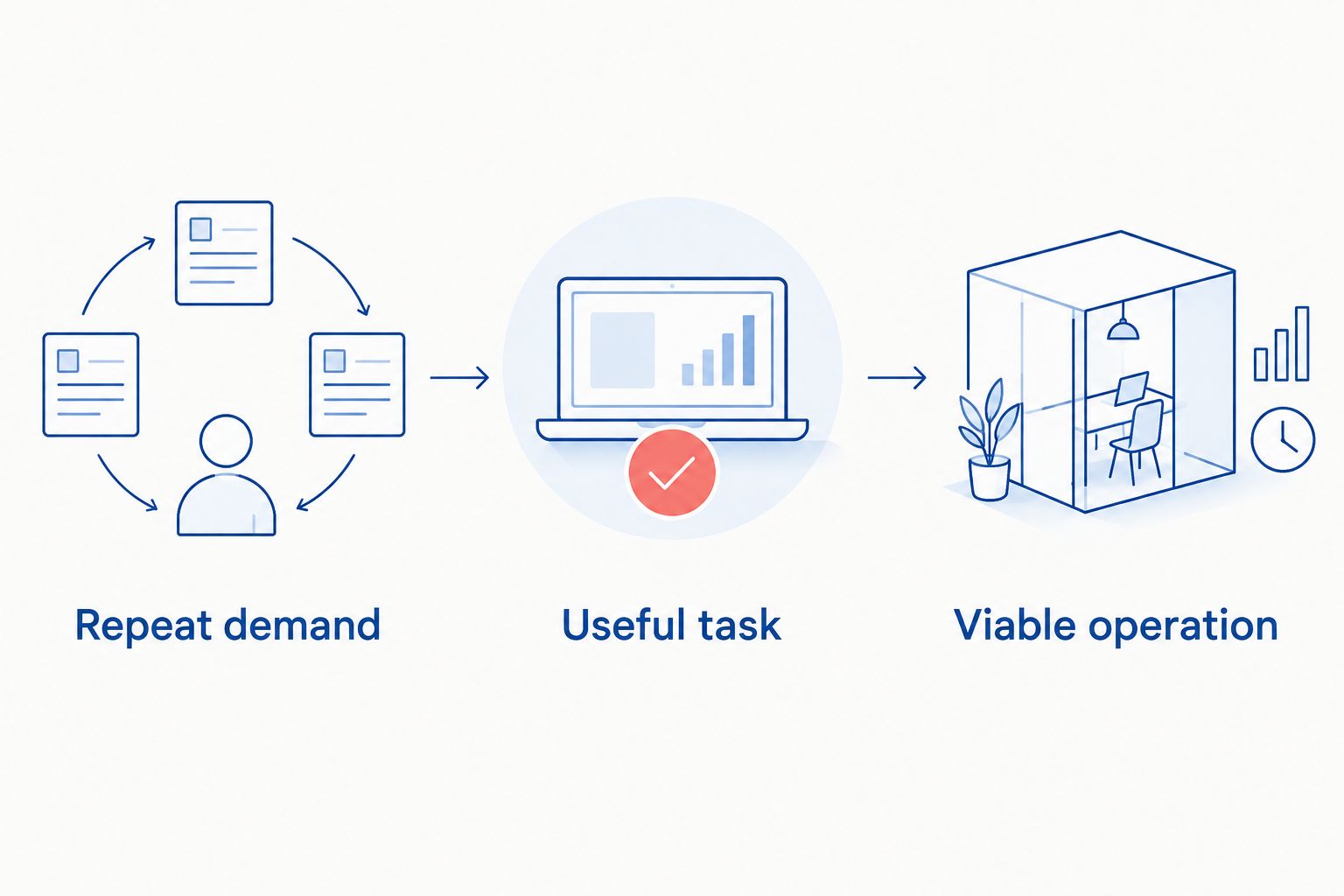
Write a short evidence statement for each gate. For example, describe which customers repeat a purchasing task, where they encounter friction and which operational team will handle failures. Do not replace evidence with a feature wishlist.
If you cannot explain the customer benefit without saying “engagement,” rewrite the brief. “Customers can reorder an approved basket without rebuilding it” describes a task you can test. “Customers feel closer to the brand” does not define software acceptance.
What evidence should you collect before development?
Review mobile shopping sessions, checkout failures, customer service requests and repeat-order patterns. Separate observations from assumptions: a support request about finding an old order is evidence of a problem, not proof that an app is the right solution.
Test the proposed journey with customers using a prototype or an improved web flow. Ask them to complete the task rather than judge whether the screens look appealing. Record where they stop, what information they need and whether they would return for the same task.
Approve the problem before approving the platform. If a simpler account page solves the issue, keep the simpler account page.
When improving the mobile website is the better move
Prioritize the website when customers struggle to find products, understand delivery information or finish payment. These are shopping problems. Moving them into an app does not resolve their underlying cause.
Start with the failing journey. Trace a customer from product discovery through payment confirmation, including validation errors, unavailable items and interrupted sessions. Fix the specific break rather than commissioning a general redesign.
A responsive website is also the stronger starting point when customers arrive through search results, shared links or campaigns. They can begin shopping in a browser without first installing an application. That does not rule out an app later; it establishes a working route for customers who do not want one.
For a 2026 roadmap, make the app proposal compete with these repairs. Specify the intended outcome of each option, the dependencies involved and the evidence that would justify continuing.
Recommendation: keep the website as the default buying channel until a separate app earns its place. This recommendation does not apply when a documented, essential workflow depends on mobile capabilities the website cannot adequately provide.
When an app has a defensible purpose
An app becomes a serious option when customers repeatedly perform a task and the proposed mobile experience removes a specific obstacle. Reordering, barcode-assisted shopping and account-based purchasing are possible requirements, not automatic reasons to build.
Take replenishment. The useful requirement is not simply a reorder button; it is a trustworthy process that checks current products, quantities, inventory and customer eligibility before placing another order. That process still needs dependable backend systems.
For a wholesale customer, the valuable task might involve an approved product list or an internal purchasing workflow. Decide whether buyers actually need an installed application or whether a browser-based portal serves them better.
Device-dependent requirements deserve a separate technical assessment. Test the required behavior on the intended operating systems and devices before committing to an architecture. Do not assume a feature works identically everywhere because it appears in a development framework's feature list.
The app earns approval through the task it improves, not through the number of features it contains. Remove features that do not support that task from the first release.
Why the value of an ecommerce app varies
The investment case depends on your customers and operating model. These factors belong in the brief:
- Purchase recurrence. A recurring purchasing task creates a reason to return; an occasional purchase needs a different justification.
- Installation motivation. Customers need a benefit that explains the extra step of installing and retaining an app.
- Integration quality. Catalog, inventory, payment and order systems must support the intended journey without conflicting records.
- Device requirements. Camera access, notifications and offline behavior require assessment against the actual device and browser requirements.
- Maintenance ownership. Someone must handle platform changes, defects, credentials and customer support after release.
- Market requirements. Languages, payment methods and business rules must match each market you actually serve.
Do not turn market requirements into a generic country checklist. A US launch, a UK launch and an EU launch require their own requirements review; they are not interchangeable operating environments. Add regional scope only where your business actually needs it.
The same discipline applies to Arabic interfaces. If Arabic is part of the release, include right-to-left layouts and real shopping journeys in acceptance testing rather than treating translation as the final task.
How should you measure whether the app is working?
Measure completed customer tasks and incremental business value, not installs alone. An install records acquisition of the application. It does not establish that the customer bought anything or that the business gained an additional order.
Define the measurement plan before launch. Track the journey from entry to completed task, identify failure states and connect orders across channels without counting the same order twice.
Compare 2 customer cohorts: customers offered the app and a comparable group continuing with the existing experience. Define cohort eligibility before reviewing results, and account for promotions or other differences that affect purchasing.
Existing loyal customers selecting the app can make app performance look stronger without proving that the app changed their behavior. Keep that selection effect separate from the outcome you are trying to measure.
Your 2026 success criteria should cover commercial and operational results. Include completed orders, repeat purchasing, support demand, refunds and maintenance effort where they are relevant. Set targets from your baseline rather than borrowing an unrelated retailer's figures.
What should you require from an app development partner?
Ask for a recommendation that includes the option not to build. A proposal should explain the customer task, the alternatives considered, the system dependencies and the work excluded from scope.
Thefiniteloop is a fit for startups and SMEs seeking ecommerce and mobile app development. That service fit does not establish that a custom app is right for your store; the project brief must still justify the additional channel.
Require written answers on:
- Which system controls product, inventory and order records.
- How failed payments and interrupted order submissions are handled.
- What works when connectivity drops, and what explicitly does not.
- Who controls application accounts, repositories, credentials and deployment access.
- Which devices and operating systems are included in testing.
- What acceptance evidence is required before release.
Ownership deserves its own discussion. Use this guide to code ownership when hiring a software company to structure the questions, then put the agreed terms in your contract.
Assign 1 accountable owner for coordinating the app's operation. Specialists can own individual systems, but someone must resolve issues that cross the boundaries between the application, payments and fulfillment.
What should the first release include in 2026?
The first release should complete the approved customer task from beginning to end. For a repeat-ordering journey, that means handling product changes, unavailable items, payment failure and confirmation—not just reproducing a successful prototype.
Define what the release excludes as clearly as what it includes. Loyalty features, personalization and additional automation need their own justification. They do not belong in scope simply because another retailer has them.
Acceptance should include unsuccessful journeys. Test interrupted connections, expired sessions, duplicate submissions and orders that cannot be fulfilled as requested. Specify the expected customer message and operational response for each case.
Keep the existing purchase route usable during rollout. A new app should not force every customer into an unproven experience or remove a working browser checkout before the replacement is accepted.
FAQ
Is a mobile app worth it for a small ecommerce business?
A mobile app is worth it when repeat customers have a recurring task that the website cannot serve adequately. Improve the website first if discovery, product information or checkout is the actual constraint.
Should I improve my mobile website before building an app?
Yes, improve the mobile website first when customers struggle with the basic shopping journey. An app connected to the same unreliable checkout or inventory systems does not remove those problems.
Is a progressive web app better than a native ecommerce app?
A progressive web app is the better fit when browser-based delivery meets the customer task. Choose native development only when the required experience justifies its platform-specific implementation and maintenance.
Can push notifications justify building an ecommerce app?
Push notifications alone do not establish a business case for an ecommerce app. Define the useful customer action behind each notification and verify permission and delivery behavior on the intended platforms.
Does a small ecommerce business need separate iOS and Android apps?
Separate native implementations are not automatically necessary. Compare responsive web, progressive web and cross-platform approaches against the actual customer workflow before choosing separate builds.
What should I measure after launching an ecommerce app?
Measure completed tasks, incremental orders and the operating effort required to support the app. Installs and activity do not establish whether the app created additional business value.
Who should maintain an ecommerce app after launch?
Assign an accountable owner before launch and document responsibilities for releases, security updates, integrations and support. Ownership must include access to the accounts and systems needed to resolve failures.
One last thing
Your most loyal customers adopting an app is not the same as the app creating loyalty. They might have continued buying through the website. Build your measurement plan around that distinction before you approve development.
For a 2026 investment decision, write down the condition that would stop the project. If customer testing shows no meaningful improvement over the website, stop. Engineering judgment includes deciding what not to build.
Related guides
- How to accept software delivery before final payment
- What to test when adding payments to an online store
- What a software maintenance agreement should cover
Your project next
Let’s build what matters
Schedule a consultation to discuss your goals and technical needs.