
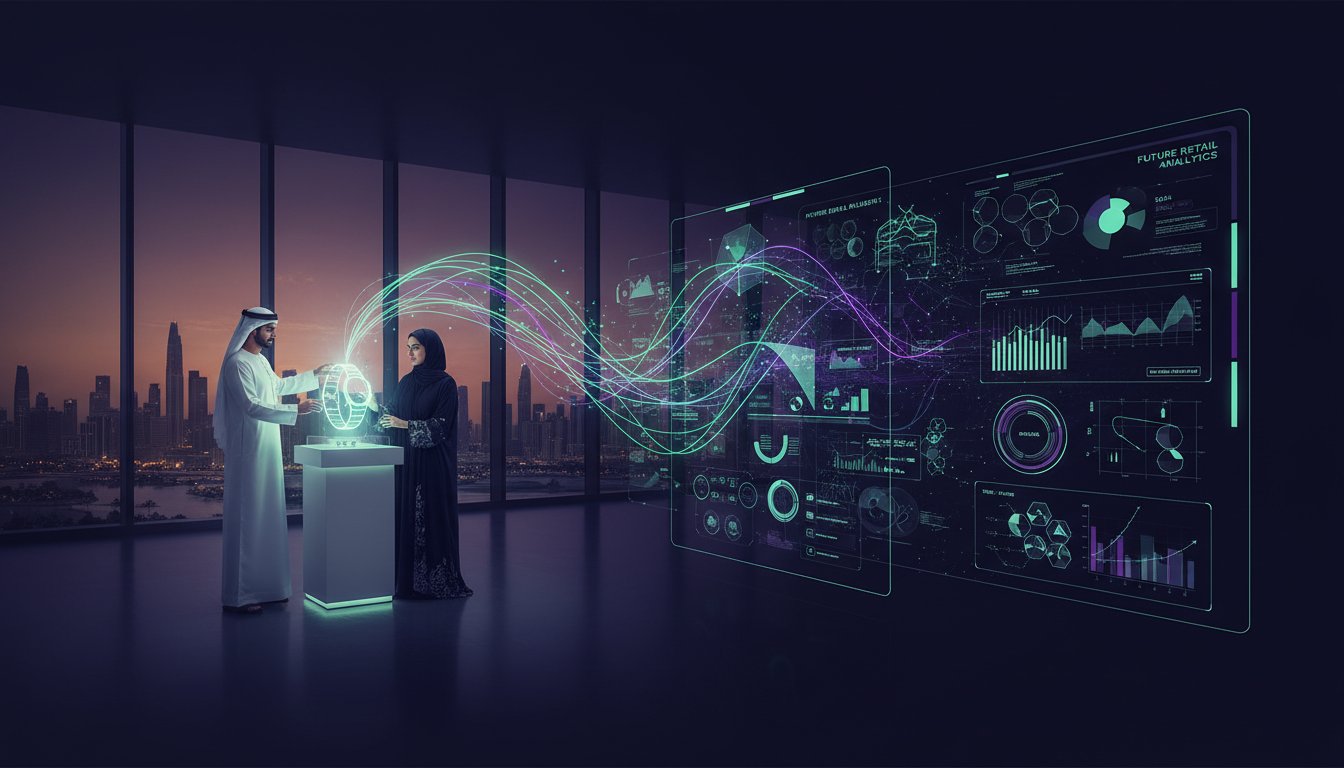
The traditional brick and mortar storefront isn’t a relic of the past; it’s the most sophisticated data sensor in your 2026 retail architecture. While headlines often predict a total digital takeover, 72% of global consumers still demand a physical touchpoint before they commit to a high-value purchase. You’ve likely watched commercial real estate costs in key retail hubs climb by 5.2% this year while your offline customer journeys remain a complete black box. It’s frustrating to manage online and physical channels that operate as strangers.
We’ll help you bridge that gap. This article provides an engineering-led perspective on building a unified retail ecosystem that tracks every movement from the sidewalk to the checkout screen. You’ll master a technical roadmap for data unification that turns siloed information into actionable intelligence. We’ll explore how to scale your operations across diverse markets, including the UAE, using a phygital framework designed for infinite growth. Your vision for a seamless brand experience meets Finite Loop’s blueprint for technical precision.
Key Takeaways
-
Redefine physical storefronts as high-touch sensory nodes that function as the experiential heart of a digital-first brand strategy.
-
Optimize capital expenditure by balancing the high-intent nature of brick and mortar assets against the rapid scalability of cloud-native infrastructure.
-
Bridge the intelligence gap by integrating in-store sensory tracking with digital analytics to create a unified, 360-degree customer profile.
-
Synchronize global supply chains using AI-driven frameworks to ensure real-time inventory accuracy across every international market touchpoint.
-
Scale your retail vision through a strategic partnership that merges bespoke engineering with high-level business logic for sustainable growth.
Table of Contents
Defining Brick and Mortar in the Post-Digital Era
Build a presence that transcends the screen. Retailers no longer view physical storefronts as mere distribution points. By 2026, a brick-and-mortar business functions as a high-touch sensory node within a digital-first strategy. This shift transforms the shop from a transactional box into an experiential brand hub. It’s a strategic pivot where the goal isn’t just to move inventory, but to solidify brand identity through physical immersion. Modern brick and mortar locations act as a physical interface for digital brands, bridging the gap between URL and IRL.
The Evolution of Physical Retail Spaces
Trace the journey of the storefront. It began as a simple utility for local trade. It then evolved into the 1990s big-box era defined by volume. Now, the "clicks-to-bricks" movement has redefined the space again. Global markets in the US, UK, EU, and UAE increasingly value these touchpoints as interactive showrooms. Data from 2024 suggests that 68% of digital-native brands plan to open physical locations to lower customer acquisition costs. These spaces allow consumers to touch, feel, and test products before finishing the journey online. This loop ensures that the physical and digital realms operate as one cohesive organism.
-
Showrooming: Prioritizing product engagement over on-site stock.
-
Tactile Feedback: Using sensory cues to build emotional resonance.
-
Global Consistency: Maintaining a premium feel across London, New York, and Dubai.
The Trust Factor in High-Ticket Transactions
High-ticket items require high-touch validation. Physical presence reduces perceived risk by 45% for luxury buyers in the EU and UAE. When a consumer prepares to spend $5,000 on a bespoke timepiece or high-end electronics, they seek more than a secure checkout page. They want a human-in-the-loop. Expert staff provide the reassurance needed for complex conversions that automated bots can’t replicate. This human element drives long-term customer lifetime value (CLV) by establishing a foundation of credibility. Your store isn’t just a place to buy; it’s a monument to your brand’s stability and commitment to quality. Physical credibility remains the ultimate currency for premium positioning in a crowded global market.
The Economic Architecture: Fixed Assets vs. Digital Scalability
Build your enterprise on a foundation of data rather than just floor space. Traditional brick and mortar investments require significant upfront CapEx. Establishing a flagship presence in London, Dubai, or New York often demands an initial outlay exceeding $500,000. In contrast, a robust digital infrastructure scales without the linear cost increases associated with physical expansion. High-end ecommerce platforms offer a global reach for a fraction of the cost of a single premium lease.
Analyze the shift in customer acquisition. Digital CAC across the US and EU rose by approximately 22% in 2023. This makes physical rent look like a stable, pre-paid marketing investment. However, as Stanford University research highlights a decline in spending at brick-and-mortar stores, businesses must justify every square foot. AI-powered inventory management now allows brands to reduce their physical footprint by 30% through predictive stock allocation. This ensures that high-rent locations only carry what actually sells, maximizing the yield of every meter.
Fixed Costs and the Value of Foot Traffic
View your store lease as a strategic marketing tool. Organic foot traffic in high-density zones provides brand visibility that digital ads can’t always replicate. You pay for the location to bypass the crowded digital auction house. The liability arises when fixed costs don’t translate into data capture. If your physical presence doesn’t feed your digital ecosystem, it’s a drain on resources. We help brands bridge this gap with custom web development that connects offline interactions with online growth.
Scalability Engineering: The Finite Loop Approach
Design your retail model to be fluid. Turn physical outlets into micro-fulfillment centres using bespoke cloud-integrated POS software. This approach allows a store in Berlin to fulfill an online order in the same neighborhood within hours. It removes the growth ceiling inherent in traditional retail. You don’t necessarily need more stores; you need smarter systems. By building lean operational models, you transform a finite physical space into a hub for infinite digital expansion. This creates a loop of continuous efficiency that powers long-term viability.
Clicks-to-Bricks: A Strategic Comparison of Retail Models
Build a bridge between digital speed and physical presence. Pure-play ecommerce relies on the cold logic of cookies; hybrid "phygital" models use sensory tracking to capture human nuance. Data from 2024 indicates that in-store sensory tracking boosts conversion insights by 22% over standard web analytics. Customer retention thrives in this overlap. Statistics from the UK retail sector show that shoppers using Buy Online, Pick Up In-Store (BOPIS) services return 15% more frequently than digital-only buyers. This logistics bridge turns a brick and mortar location into a localized fulfillment hub. By 2025, 60% of top-tier retailers in the EU and UAE will use computer vision to analyze footfall and dwell time. This sensory data provides a 30% higher accuracy rate in sentiment analysis compared to digital heatmaps.
The Comparison Framework for Global Brands
Scale global servers or manage national storefronts. Both require precision. Global brands face a 40% increase in operational complexity when balancing localized inventory with cloud infrastructure. Showrooming used to be a threat; now, it’s a data point. Smart brands track this through an integrated omnichannel retail strategy to attribute sales correctly. Digital storefronts often yield a 12% higher initial ROI due to lower overhead, yet physical flagship stores generate 3x the long-term brand equity per customer. Managing this requires custom web development services that sync real-time stock levels across multiple international markets instantly.
The Rise of the Phygital Experience
Design spaces where reality meets code. Integrate AR mirrors to let customers "wear" 50 items in five minutes. Use AI to sync in-store displays with a user’s web history. A 2025 study suggests that personalized in-store interactions driven by online data increase basket size by 18%. The choice between digital and physical is dead. Strategy now demands a merger. Your vision for a brick and mortar presence becomes our blueprint for a seamless digital loop. We build the systems that make "click-to-brick" feel like a single, fluid movement rather than a disjointed transaction.
Engineering the Omnichannel Loop: A Technical Framework
Success in 2026 requires more than a website. It demands a technical ecosystem where brick and mortar assets function as high-velocity data nodes within a unified digital strategy. By 2026, 58% of global retail sales will be digitally influenced, according to Forrester projections. This shift requires a rigorous five-step engineering approach to close the loop between physical and digital touchpoints.
-
Step 1: Build a bespoke cloud-native repository. Centralize fragmented data from disparate sources into a single, accessible layer.
-
Step 2: Deploy AI-driven supply chain synchronization. Real-time inventory accuracy is essential. A 2% discrepancy in stock levels can lead to a 10% drop in customer satisfaction scores.
-
Step 3: Secure every endpoint. Retailers saw a 20% increase in POS-targeted attacks in 2024. Advanced encryption is the only defense.
-
Step 4: Design UI/UX that eliminates friction. The transition from a mobile app to a physical aisle should feel invisible to the user.
-
Step 5: Iterate. Use unified analytics to track the journey from the first click to the final in-store purchase.
Data Unification and API Integration
Establish a "Single Source of Truth" for your operations. Your legacy hardware shouldn’t hinder growth. We integrate aging ERP systems with modern, scalable web applications through robust APIs. This ensures your frontend ecommerce platform and your brick and mortar stock rooms speak the same language. Scalability begins with a unified architecture. Your vision, our engineering.
Cybersecurity in the Omnichannel Environment
Protect customer data across every node. As shoppers move between digital and physical spaces, their sensitive information must remain encrypted. Implement multi-layered security for in-store IoT devices and mobile payment systems. We ensure your infrastructure meets global standards like GDPR in the EU and the UAE’s Federal Decree-Law No. 45 of 2021. Security isn’t a feature; it’s the foundation of brand trust.
Build your future with bespoke web development solutions that scale with your global ambitions.
Architecting the Future: How Finite Loop Bridges the Divide
Modern retail demands more than a simple digital storefront. It requires a synthesis of physical presence and digital intelligence. Finite Loop acts as the strategic architect for this evolution. We help retail leaders move beyond the limitations of traditional brick and mortar models by engineering bespoke AI solutions that unify the customer journey. Our approach addresses the complexity of modern commerce with surgical precision. We don’t just solve technical problems; we unlock new avenues for revenue.
Your vision, our code. This philosophy drives every project we undertake. We recognize that legacy systems often act as anchors, preventing established retailers from competing with agile, digital-native brands. We specialize in modernizing these foundations. By integrating advanced data analytics and custom engineering, we transform isolated sales channels into a cohesive ecosystem. This transition moves your business from solving finite technical hurdles to achieving infinite scalability.
Strategic Consultancy for Global Retailers
Off-the-shelf software often creates operational bottlenecks. Research indicates that retailers utilizing custom-built inventory management systems saw a 22% increase in efficiency during the 2024 peak season. We move beyond generic SaaS products to deliver precision-led, custom digital tools. Our product strategy services ensure your specific business goals are translated into high-performance code. We focus on long-term technical excellence. We build for the entire lifecycle, ensuring your technology remains an asset rather than a liability as market trends shift.
-
Design intuitive interfaces that reduce staff training time by up to 40%.
-
Build AI-driven demand forecasting to minimize overstocking.
-
Scale backend architectures to handle massive traffic surges without latency.
Partnering for Scalable Innovation
Expanding across the US, UK, EU, and UAE requires a digital foundation that handles regional nuances without sacrificing speed. We help you navigate these diverse markets with ease. Our engineering teams build robust systems designed to outlast short-term market fluctuations. By 2026, the gap between digital-first and traditional brick and mortar retailers will widen significantly. We ensure you stay on the right side of that divide. We provide the technical gravity needed to support global growth while maintaining the agility of a startup.
Build a digital core that breathes. Scale your operations without friction. Design for the human behind the screen. Finite Loop provides the expertise to turn complex digital transformation into a competitive advantage.
Scale your retail vision with Finite Loop
Mastering the 2026 Retail Convergence
The retail landscape of 2026 demands a departure from binary thinking. Success no longer hinges on choosing between digital storefronts or traditional brick and mortar locations. It’s about engineering a seamless loop that captures value across the US, UK, EU, and UAE markets simultaneously. Brands leveraging precision-led AI engineering will outperform competitors by bridging the gap between fixed assets and infinite digital scalability. Industry forecasts suggest that by 2026, 58% of global consumers will expect a unified experience that ignores the borders of physical and digital space. Your vision deserves a technical architecture that scales without friction. We provide the strategic expertise needed to navigate the complex regulatory and consumer landscapes of the US and EU while capturing growth in the UAE and UK. Our bespoke end-to-end consultancy ensures your infrastructure remains robust and future-proof across every major economic zone. Build for today. Scale for tomorrow. Design your digital transformation with Finite Loop. The future of global commerce is yours to architect with confidence.
Frequently Asked Questions
What is the modern meaning of brick and mortar in 2026?
In 2026, brick and mortar represents a high-tech experiential hub that merges physical presence with digital intelligence. It’s no longer just a point of sale; it’s a strategic fulfillment node where 45% of online orders are processed via "buy online, pick up in-store" models across the US and EU. These spaces focus on sensory engagement and brand storytelling, acting as a physical anchor for a brand’s digital ecosystem.
Is brick and mortar still relevant for small businesses?
Physical storefronts remain vital for small businesses, providing a 20% higher trust rating among local consumers compared to digital-only brands. In markets like the UK and UAE, small retailers use these spaces to build immediate community rapport and reduce customer acquisition costs. A physical location serves as a living billboard, often increasing local online traffic by 37% within the first six months of opening.
How does brick and mortar compare to ecommerce for luxury brands?
Luxury brands prioritize brick and mortar because 70% of high-net-worth individuals prefer tactile interaction before purchasing items exceeding $5,000. While ecommerce drives initial discovery, the physical boutique delivers the bespoke service and atmosphere that digital platforms can’t replicate. Leading fashion houses in Paris and Dubai maintain flagship stores to ensure a seamless, white-glove experience that justifies premium price points and fosters long-term loyalty.
What are the main advantages of having a physical storefront?
Physical stores offer immediate product gratification and a 30% lower return rate than online channels. Customers touch, feel, and try products, which eliminates the uncertainty that often leads to digital returns. Beyond logistics, a storefront acts as a robust marketing asset. It captures foot traffic and provides a controlled environment for brand immersion, which is essential for scaling in competitive markets across the EU and US.
How can AI improve the performance of a brick and mortar store?
AI optimizes brick and mortar performance through predictive inventory management and real-time footfall analytics. Retailers using AI-driven heat mapping see a 15% increase in floor space efficiency by 2025. These systems analyze historical data to forecast demand, ensuring the right stock is available at the right time. This precision reduces waste and allows staff to focus on high-value customer interactions rather than manual stock checks.
What is the cost difference between physical and digital retail?
Physical retail requires higher upfront capital expenditure for leases and fit-outs, often costing $150 per square foot in major global hubs. Ecommerce carries lower entry costs but higher operational expenses, with digital marketing costs rising 25% annually since 2023. While a storefront demands rent, it bypasses the aggressive "pay-per-click" wars required to gain visibility in a saturated digital marketplace. Success requires balancing these two distinct financial structures.
What technical infrastructure is needed for a phygital retail model?
Build a phygital model by deploying a unified commerce platform that syncs inventory across all channels in real-time. You’ll need high-speed 5G connectivity, IoT sensors for shelf monitoring, and RFID tagging for 99% inventory accuracy. This infrastructure creates a seamless loop between the warehouse and the storefront. It allows customers to transition from a mobile app to a physical dressing room without friction, ensuring data flows freely through every touchpoint.
Is brick and mortar retail dying or evolving?
Retail is evolving into a sophisticated hybrid model rather than dying. Data from 2024 shows that 80% of traditional retailers are reinvesting in store technology to meet 2026 consumer expectations. The industry is moving toward "Retail 5.0," where the physical store serves as a brand experience center and a logistical hub. It’s a strategic pivot that prioritizes depth of engagement over sheer volume of physical locations.
Your project next
Let’s build what matters
Schedule a consultation to discuss your goals and technical needs.